Imagine arriving home on a cold, rainy evening (yes, this even happens during a Christchurch summer!) and opening your driveway gate without having to leave your car. Or being able to let a visitor through your gate while you’re away from home.
These are just some of the everyday conveniences that come with automatic gates. But modern automatic gate options go well beyond a simple remote control.
From sliding and swing gate motors to smartphone access, video intercoms and solar power, there’s a wide range of technology available to make entering and leaving your property easier, safer and more secure.
With so many options available, how do you know which setup is right for your home?
Whether you’re planning a new automatic driveway gate or looking to upgrade an existing manual gate, here’s what you should consider before choosing your system.
Sliding or Swing Gate Automation?
One of the first decisions is how your gate will open and close.
The most suitable option depends on your property’s layout, the space available and how you use your driveway.
Sliding Gate Automation
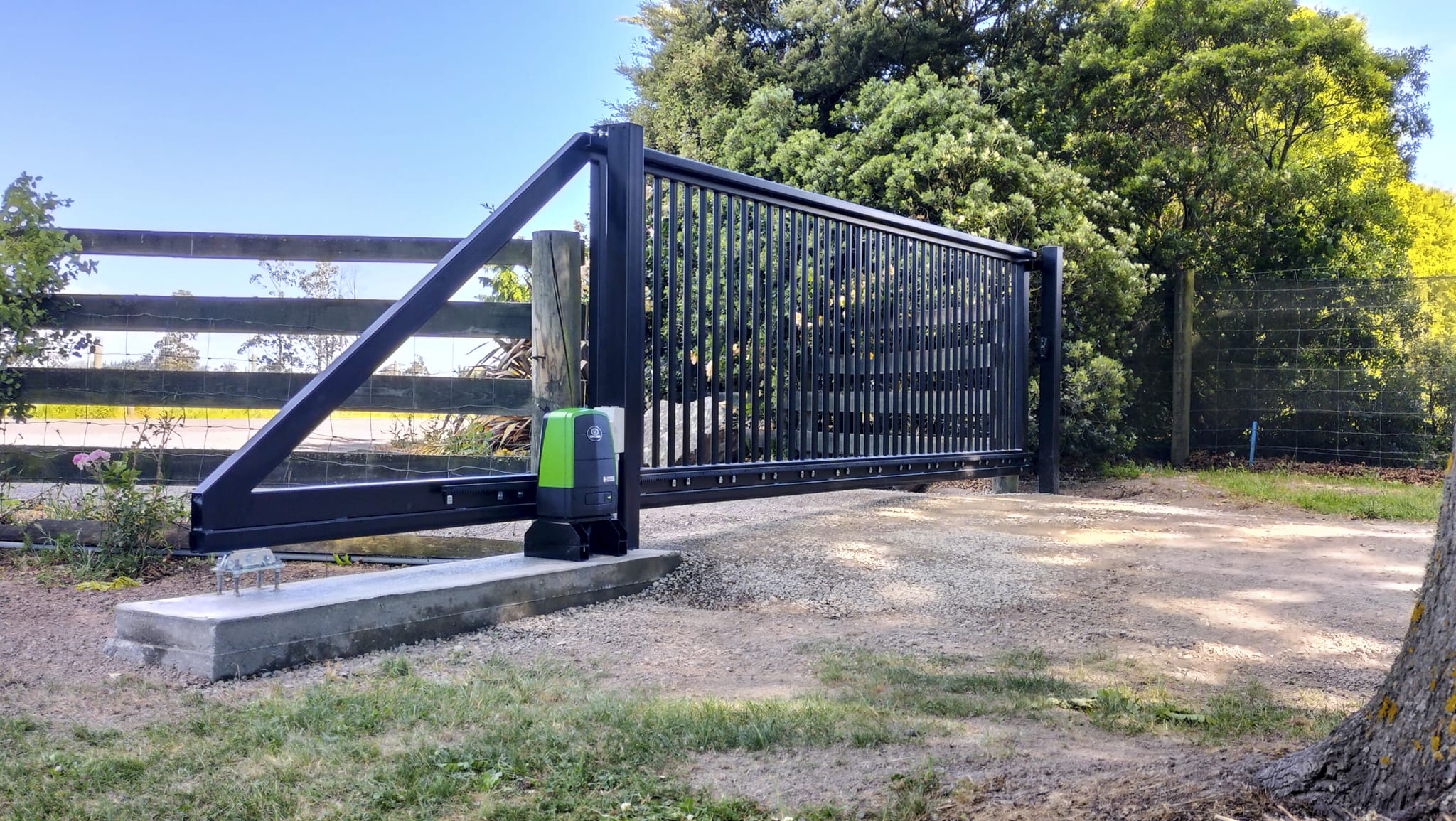
Sliding gates move horizontally along the fence line rather than swinging into or away from the driveway.
They’re a popular option for residential properties where there isn’t enough room for a swing gate to open.
A sliding gate motor uses a geared drive system to move the gate along its track or supporting mechanism, allowing it to open and close automatically.
Sliding gates can be particularly useful for:
- Properties with limited driveway depth.
- Entrances where vehicle parking restricts swing gate clearance.
- Wide driveways requiring a single gate opening.
- Properties where sliding movement is more practical than swinging.
However, sliding gates generally require sufficient space alongside the entrance to accommodate the gate when it’s open.
Where this space is limited, telescopic or sectional sliding systems may be considered.
Swing Gate Automation
Swing gates operate on hinges, opening inwards or outwards depending on the property layout and site requirements.
They can feature a single gate leaf or two leaves that open from the centre.
Automatic swing gate systems use motors connected to the gate leaves to control their movement.
Swing gates are often well suited to properties with sufficient clearance and can complement both traditional and contemporary homes.
However, the driveway gradient, wind exposure and surrounding obstacles need to be considered to ensure safe, reliable operation.
For both sliding and swing gates, the right motor must be matched to the gate’s dimensions, weight and expected use.
Designer Gates provides custom driveway gates and automation solutions designed around the requirements of each entrance.
Choosing the Right Automatic Gate Motor
The motor is at the heart of any automatic gate system.
While most homeowners won’t need to choose a specific motor model themselves, understanding the main considerations can help you make an informed decision.
Not all motors are suitable for every gate. The correct choice depends on several factors.
Gate Size and Weight
Larger and heavier gates require motors capable of moving them reliably.
The gate’s construction, materials and operating mechanism all influence the motor requirements.
Choosing a suitable motor helps ensure smooth movement while reducing unnecessary strain on the system.
Frequency of Use
Consider how often your gate will open and close throughout the day.
A residential property with a couple of vehicles may have very different requirements from a busy shared driveway or commercial entrance.
For properties with frequent vehicle movements, a motor designed for a higher duty cycle may be more appropriate.
Reliability and Long-Term Performance
Quality matters when selecting gate automation.
A reliable motor, correctly installed and maintained, should provide consistent operation while accommodating the conditions at your entrance.
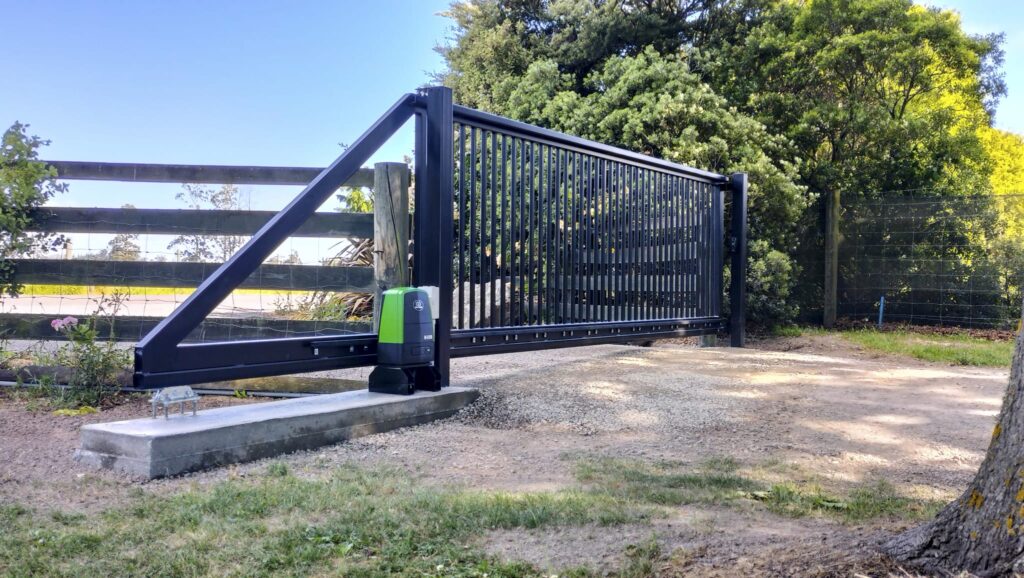
At Designer Gates, we work with established automation brands, including Centurion and FAAC, to provide systems suited to different gate configurations and property requirements.
How Do You Want to Open and Control Your Gate?
One of the biggest advantages of modern automatic gates is the flexibility to choose how you access your property.
While remote controls remain a popular option, there are several other technologies worth considering.
The best solution often involves combining different access methods to suit your household.
Remote Controls: Simple Everyday Convenience
Remote controls are one of the most familiar ways to operate an automatic gate.
With the press of a button, you can open your driveway gate from your vehicle without needing to get out.
They’re particularly useful for households with regular daily vehicle movements.
Multiple remotes can be provided so different family members can access the property independently.
For many homeowners, remote controls provide a straightforward and convenient starting point.
Keypad Entry: Access Without a Remote
Keypads allow users to enter a code to open the gate.
This can be especially convenient when you need to provide access to people who don’t have a remote control.
For example, you might use a keypad for:
- Family members and regular visitors.
- Tradespeople and contractors.
- Holiday accommodation guests.
- Property maintenance services.
Depending on the system, access codes may be managed or changed when required.
This provides flexibility without needing to distribute additional physical remotes.
Smartphone Control: Manage Your Gate From Your Phone
Smart gate automation allows compatible systems to be operated using a smartphone.
Depending on the technology installed, this can give you the ability to check your gate’s status and open or close it remotely.
For example, if a delivery arrives while you’re at work, you may be able to open the gate using your phone.
Smartphone access can also be particularly useful for lifestyle properties, holiday homes and households where several people require access.
Designer Gates offers smartphone-compatible automation solutions, including Centurion SMART systems and Remootio technology.
The available functions depend on the motor, connectivity and accessories installed.
Video Intercoms: See and Speak With Visitors
A video intercom adds another level of convenience and control to your entrance.
Instead of opening your gate without knowing who is outside, you can see and communicate with visitors before deciding whether to grant access.
Depending on the system, calls may connect to an indoor monitor or compatible smartphone.
Video intercoms are particularly useful for properties with long driveways or entrances that aren’t visible from the house.
They also make it easier to manage deliveries, guests and unexpected visitors.
Exit Sensors: Hands-Free Access
Exit sensors can automatically trigger your gate to open when a vehicle approaches from inside the property.
Rather than pressing a remote every time you leave, the system detects an approaching vehicle and activates the gate.
This can be a convenient addition for busy households, particularly when multiple family members use the driveway.
It’s important that the sensor is selected and positioned appropriately, with the gate’s safety systems considered as part of the overall installation.
Electronic Locks and Additional Access Controls
Some gate systems can also incorporate electronic locks, push buttons and other access control accessories.
Electronic locks may provide additional holding security for suitable swing or pedestrian gate installations, while push buttons offer a convenient way to operate a gate from a fixed location.
The key is choosing features that make sense for how you use your property.
You can explore the available gate automation and access control options with Designer Gates.
Mains Power, Low Voltage or Solar Automation?
Another important consideration is how your automatic gate will be powered.
The best option depends on the location of your entrance, available electricity supply and the accessories you intend to install.
Mains Power
Mains-powered systems are a common option where a suitable electricity supply can be provided near the gate.
They can support a wide range of motors and accessories, making them a practical choice for many residential properties.
However, installing a new mains power supply may involve electrical work and trenching, particularly when the entrance is some distance from the house.
Extra Low Voltage Systems
Extra low voltage power arrangements can provide an alternative where installing mains power directly at the gate isn’t practical.
These systems may allow suitable low-voltage cabling to be routed from an existing supply location.
The appropriate setup depends on the motor, cable distance, power requirements and accessories being installed.
Designer Gates can assess these factors and coordinate electrical work where required.
Solar-Powered Gate Automation
For rural and lifestyle properties, solar power can be an attractive option.
A solar-powered gate system uses solar panels and battery storage to supply the energy required for operation.
This can be particularly useful where the entrance is a long distance from the nearest power connection.
However, solar automation isn’t suitable for every installation.
The number of daily gate movements, motor power requirements, accessories, battery capacity and available sunlight all influence whether a solar system will perform reliably.
A professional assessment is important to ensure the system is designed for the property’s requirements.
What Safety and Security Features Should You Consider?
Automatic gates are heavy, moving structures, so safety should be an essential part of every installation.
A well-designed system needs to protect people, vehicles and surrounding property while providing reliable operation.
Several features can contribute to safer automatic gate use.
Obstacle Detection and Safety Sensors
Safety sensors, including photoelectric beams, can help detect people, vehicles or other objects in designated areas around a moving gate.
Depending on the system, they can prevent movement or trigger the gate to stop or reverse when an obstruction is detected.
Motor force monitoring and other protective measures may also be required.
These features need to be selected and installed according to the specific gate design and its potential hazards.
Manual Release and Battery Backup
What happens if there’s a power cut?
Many automatic gate motors include a manual release mechanism, allowing the gate to be operated manually when the motor cannot function normally.
Some systems also include battery backup, enabling continued automatic operation during certain power interruptions.
The amount of backup operation available depends on the system and battery capacity.
It’s worth discussing these features before installation, particularly if your driveway gate provides the only vehicle access to your property.
Secure Access Management
Access controls can also contribute to the security of your entrance.
For example, keypads allow access codes to be changed, while compatible smart systems may provide additional control over who can operate the gate.
However, the overall security of your property also depends on the gate structure, surrounding fencing, locking arrangements and how access credentials are managed.
Choosing the right combination of features can help create a secure and convenient entrance without making everyday access unnecessarily complicated.
Can You Add Automation to an Existing Driveway Gate?
If you already have a manual driveway gate, you may not need to replace it to enjoy the benefits of automation.
Many existing swing and sliding gates can be upgraded with a suitable motor and access controls.
However, not every gate is ready for automation.
Before installing a motor, several factors need to be assessed:
- Structural condition: Is the gate strong enough and in good condition?
- Gate movement: Does it open and close smoothly without excessive resistance?
- Hinges or tracks: Are the existing components suitable for automated operation?
- Power availability: Can an appropriate power supply be provided?
- Safety: Can the required protective measures be installed?
- Available space: Is there sufficient clearance for the motor and gate movement?
In some cases, modifications may be needed before automation can be installed safely.
Designer Gates can assess existing gates and recommend whether retrofitting automation is practical or whether a replacement would provide a better long-term solution.
How to Choose the Right Automatic Gate Setup
With so many gate automation options available, it can be difficult to know which features are essential and which are simply nice to have.
A useful starting point is to think about how you want your entrance to work.
Consider these questions:
- How many vehicles use your driveway each day?
- Do you want to open your gate without leaving your vehicle?
- Do visitors, contractors or delivery drivers need access?
- Would you benefit from controlling your gate remotely?
- Is your entrance visible from your house?
- Is electricity available near the gate?
- Would a video intercom or exit sensor make everyday life easier?
- Are there any special security or accessibility requirements?
For example, a suburban household might choose a sliding gate with remote controls, a keypad and a video intercom.
A lifestyle property with a long driveway might benefit from solar-powered automation, smartphone access and a suitable visitor communication system.
The most appropriate combination will depend on the property’s layout, how the gate is used and the homeowner’s priorities.
Rather than choosing accessories individually, it’s worth planning the complete system so the motor, power supply, safety equipment and access controls work together.
Automatic Gate Installation in Christchurch and Canterbury
At Designer Gates, we believe gate automation should make everyday life easier while improving security and access to your property.
Our team designs and installs automatic gate systems throughout Christchurch, North Canterbury and the wider Canterbury region.
Whether you’re planning a new automated driveway gate or upgrading an existing entrance, we can help you explore the available motor, power supply and access control options.
From remote controls and smartphone access to video intercoms, solar systems and safety features, we’ll recommend a solution tailored to your property and how you use it.
With local design, installation and ongoing servicing support, we can manage the process from initial consultation through to the finished installation.
Ready to explore your automatic gate options?
Contact Designer Gates to discuss your requirements and request a quote for gate automation in Christchurch or Canterbury.
Frequently Asked Questions About Automatic Gates
What are the different types of automatic gates?
The two most common types are sliding gates and swing gates. Sliding gates move horizontally along an entrance, while swing gates open on hinges. Both can be fitted with suitable electric motors and access controls. The best option depends on the available space, driveway layout, gate size and usage requirements.
Can I open my automatic gate with my smartphone?
Yes. Many modern automatic gate systems support smartphone control through compatible motors or additional smart access devices. Depending on the system, you may be able to open, close and monitor your gate remotely. Reliable connectivity and appropriate access settings are important.
Can automatic gates run on solar power?
Yes. Solar-powered gate automation can be suitable for properties where mains electricity is difficult or expensive to install. These systems typically use solar panels and battery storage. Suitability depends on sunlight, gate usage, motor requirements and the power demands of accessories such as intercoms.
What happens to automatic gates during a power cut?
Many automatic gates have a manual release mechanism that allows the gate to be operated without the motor. Some systems also feature battery backup for continued automatic operation during power interruptions. The available backup time and features depend on the motor and battery setup.
Can I automate my existing driveway gate?
Many existing driveway gates can be automated if they’re structurally sound and operate smoothly. A professional assessment is needed to check the gate’s weight, hinges or tracks, power availability and safety requirements. Some gates may need modifications before an automation system can be installed.